Adaptive Downsampling
Motivation
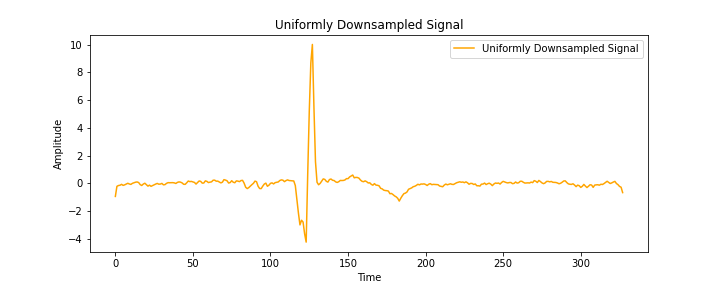
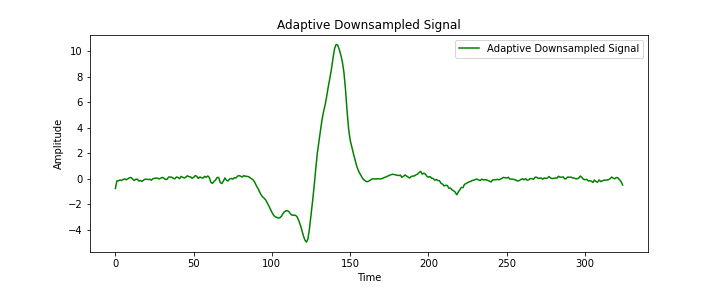
Conventional downsampling techniques often apply a uniform reduction across the entire signal, regardless of the signal’s content. This approach can lead to the retention of parts of the signal that are not particularly useful or informative, while potentially discarding more important features. To address this issue, we propose an adaptive downsampling algorithm that dynamically adjusts the downsampling rate based on the signal’s variability. The goal is to preserve the most significant parts of the signal, while still reducing the overall length to fit within the constraints of the application, such as context length.
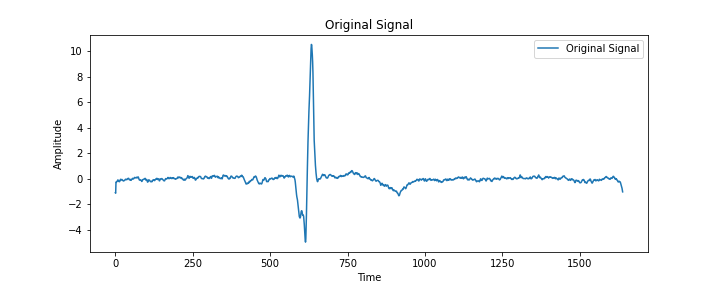
Original Signal
Uniformly Downsampled Signal
Adaptive Downsampled Signal
The Adaptive Downsampling Approach
Our adaptive downsampling algorithm works by analyzing the variability of different segments of the signal and adjusting the downsampling rate accordingly. Here’s a step-by-step breakdown of the approach:
- Calculate Variability:
- The signal is divided into segments, and the variability of each segment is calculated. Variability can be measured using standard deviation, variance, or other metrics, depending on the specific characteristics of the signal.
- Determine Downsampling Rates:
- Based on the calculated variability, the algorithm assigns higher downsampling rates (i.e., more aggressive reduction) to segments with low variability and lower downsampling rates (i.e., more data retention) to segments with high variability.
- Adaptive Downsampling:
- The signal is then downsampled according to the determined rates. This step ensures that more important parts of the signal, as identified by higher variability, are preserved more effectively.
- Intelligent Point Removal:
- After the initial adaptive downsampling, the algorithm fine-tunes the signal length by selectively removing additional points if necessary. Instead of uniformly truncating the signal, points are removed based on a calculated interval, and the values of removed points are averaged with their neighbors. This process ensures that the final signal length meets the target requirements without losing critical information.
Advantages
This adaptive downsampling approach has several advantages over conventional methods:
Content-Aware: By focusing on variability, the algorithm retains the most informative parts of the signal while discarding less important data.
Flexible: The algorithm is adaptable to different types of signals and can be tuned based on the specific needs of the application.
Preserves Key Features: The intelligent point removal step helps maintain the overall shape and important features of the signal, even after significant reduction in length.